Alliance of Indian Waste-Pickers (AIW)
The National Database of waste-pickers is a platform-based application that manages information and training programs for waste-pickers.
Overview
The National Database of waste-pickers is a platform-based application that manages information and training programs for waste-pickers. It has a User Management Module and a Dashboard for generating reports. It will merge with existing member organization databases and include privacy and data protection policies
The Alliance of Indian Waste-pickers (AIW) is establishing a nationwide database of waste-pickers in India with the aim of strengthening organizational efforts. This database will also function as a tool to track the Alliance's outreach and its members' progress towards inclusion in various social and livelihood protection initiatives.
The databases helped the members enroll waste pickers in various ration distribution programs offered by the state and local governments, but there was a need for a more comprehensive and unified approach to assess the impact of the COVID-19 pandemic and lockdowns on the lives of waste pickers and their families.
Problem Statement
Coordinating and managing relief efforts effectively became a challenge due to various member organizations' use of multiple databases. Although these databases assisted in enrolling waste pickers in ration distribution programs offered by state and local governments, a more comprehensive and unified approach was necessary to assess the impact of the COVID-19 pandemic and lockdowns on the lives of waste pickers and their families. To provide essential support and assistance to waste pickers during these challenging times, the Alliance required a detailed and centralized database to enable them to understand the full extent of the situation.
Current Process and Challenges
• AIW keeps track of the progress of waste picker registration, which is currently conducted offline through physically printed forms. • There’s inconsistency in data as multiple people do data entry. • There currently needs to be standardization of data about the management of waste pickers, and there are standards in place for campaigns or capacity-building events related to waste picking. • Data is scattered • There needs to be an established or organized centralized framework. • Facing issue of low/no internet connectivity in some areas • Campaigns often need help capturing every aspect of their message or goal online. • There are errors in the data due to offline reporting, which causes discrepancies. • There are three modules, one for waste-picker family members. They can find out with a mobile number. • Duplicate records
Product Goals
• To streamline entire data for AIW & its member Organization within a single interface. • To build intuitive experiences for AIW & its member Organizations enhancing data • Entry/ visualization & monitoring use-cases
Solution
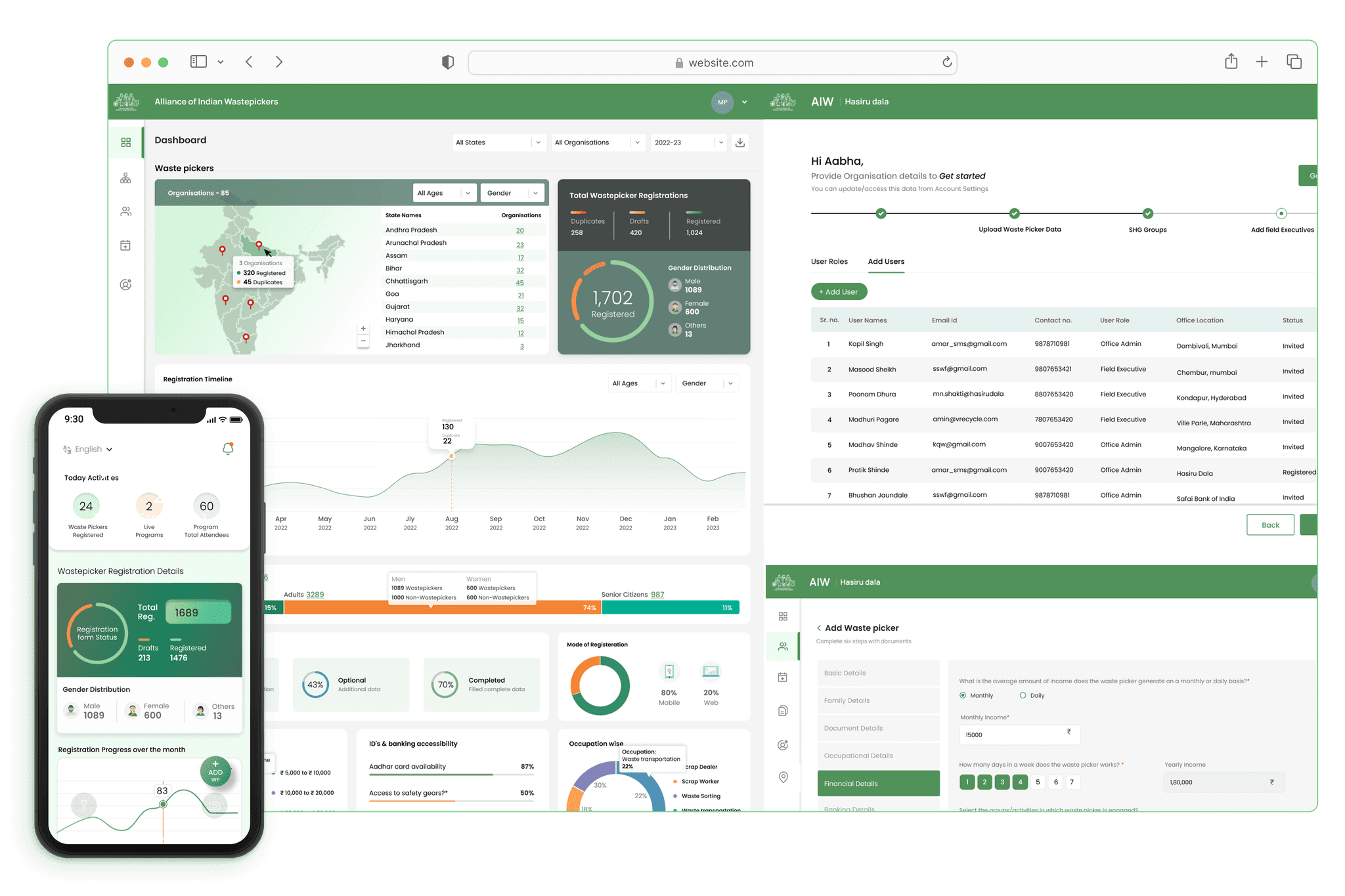
Breaking down the Problem statements into smaller Solution components This application allows waste pickers to register with organizations that maintain a database. The application includes a dashboard view and the ability to generate unique IDs. There is also a web application for member organizations with features like tracking registrations and campaigns and generating reports. The application can be used offline, is data-friendly, and is multilingual.
Protptype
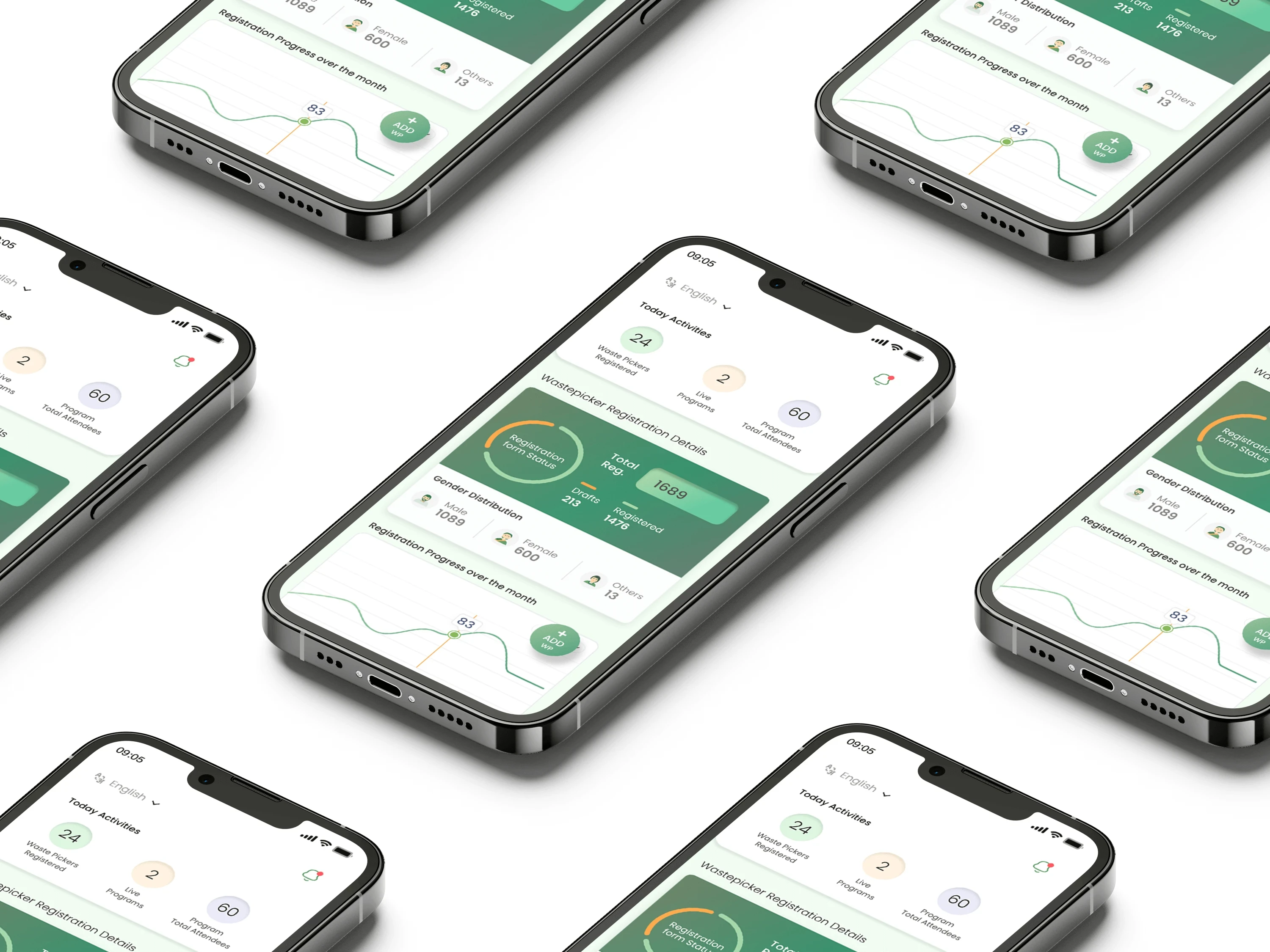
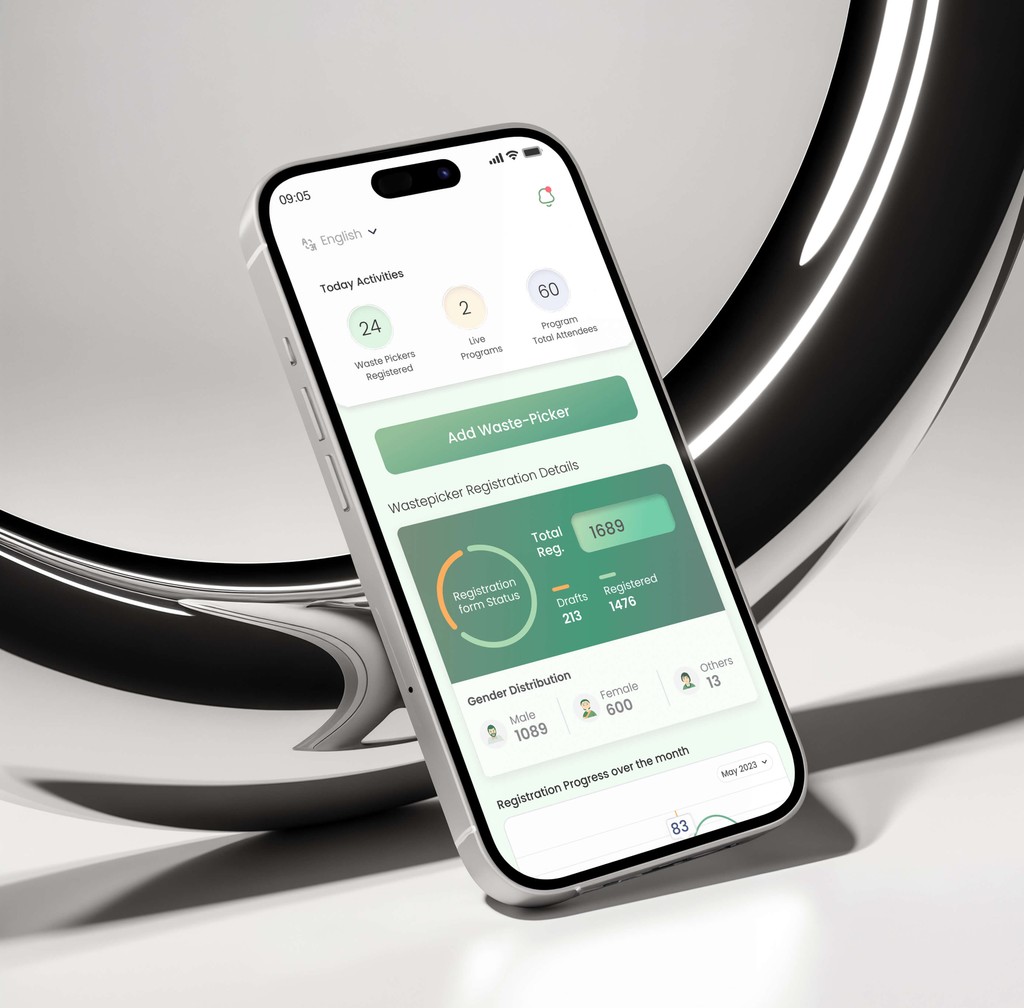
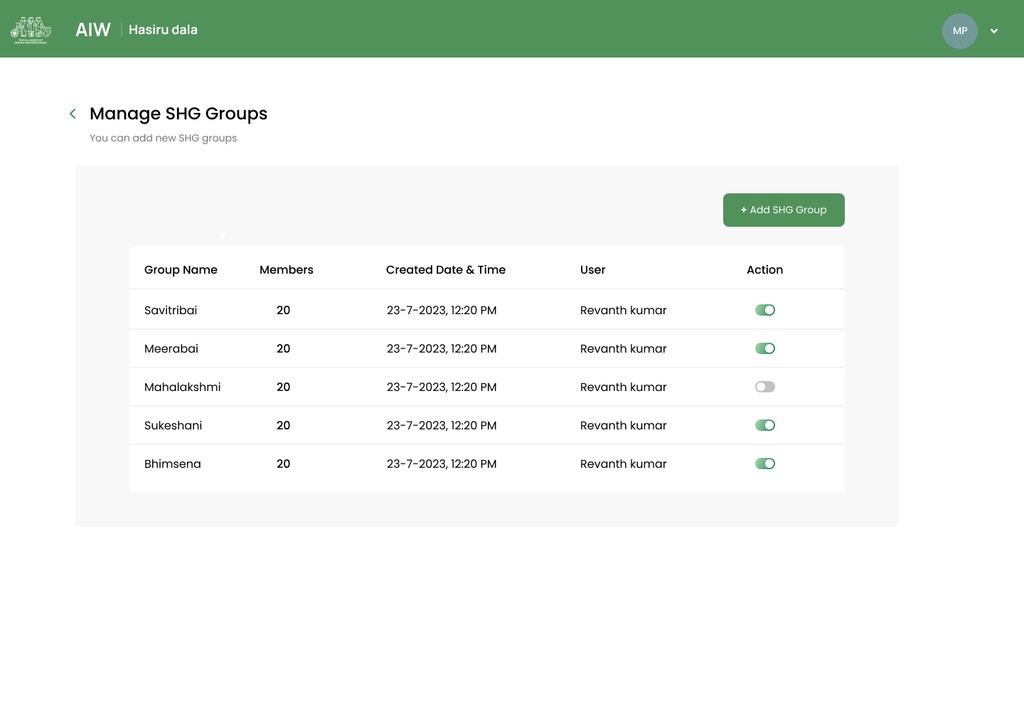
I created a user-friendly registration form with local language options. Consistent UI patterns, clear CTAs, and progress indicators guide users through onboarding. An intuitive dashboard includes graphical widgets. Data visualization tables should have a clear structure, filtering, sorting, color coding, responsiveness, pagination, tooltips, and summary statistics.
Mobile UI Design
Designing a waste picker registration application with Material Design (for Android) and iOS Human Interface Guidelines (for iOS) involves adhering to the specific design principles and guidelines set by each platform
Human Interface Guidelines (HIG):
Follow guidelines for navigation, content organization, and interactions.
Adhere to Apple's HIG for consistent and familiar iOS experiences.
Typography and Font Sizes:
Use Apple's recommended system fonts and sizes for consistency.
Prioritize legibility and clarity in text elements.
Material Design (Android)
Material Components:
Follow the Material Design guidelines for component behavior and styling.
Use navigational patterns like tabs or the bottom navigation bar.
Use the navigation drawer for additional options or settings.
Aa
Typography
I am using the recommended typography guidelines for font choices and sizes based on IOS and Android.
I followed the readability with appropriate line spacing and good contrast between text and background for readability.
Visual Hierarchy
Apply a clear visual hierarchy to guide users through the interface.
Maintain the brand colors are used consistently and placed appropriately on all materials. Additionally, consider the importance of contrast to ensure readability.
Iconography
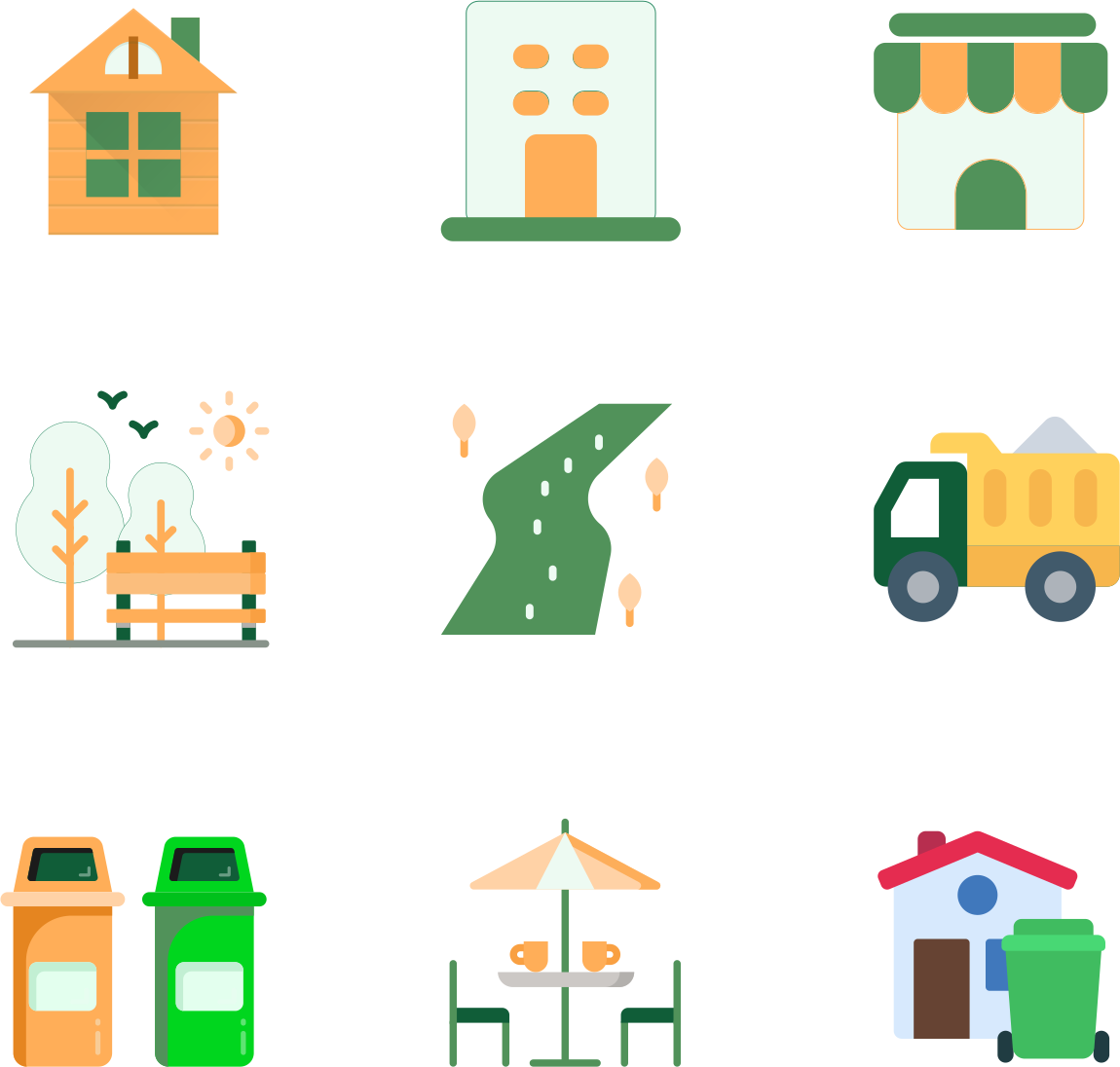
I am using custom-made flat icons for IOS and Android icons.
We maintain consistency in icon style and size throughout the application.
Using color icons as primary icons is a common design practice, particularly in user interfaces.
Desktop UI Design
Designing a waste picker registration application with Material Design (for Android) and iOS Human Interface Guidelines (for iOS) involves adhering to the specific design principles and guidelines set by each platform




Menu